
Legionella-Related Infection Risk
Home » Our Services » Environmental Microbiology and Water Hygiene » Legionella-Related Infection Risk
Head of Department
Dr. Nicole Knabe
Order Processing
Kerstin Blex
Cornelia Bremberg
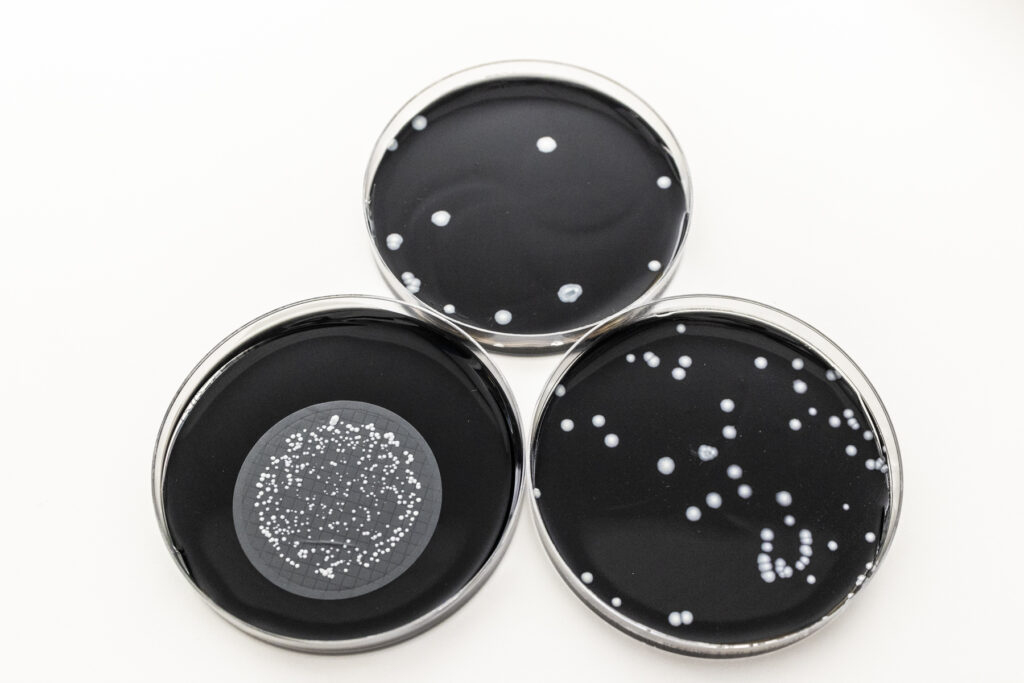
Occurrence of Legionella
Legionella are facultatively pathogenic bacteria and are ubiquitous in almost all aquatic habitats (e.g. groundwater and surface waters, rivers and lakes, sludge, hot springs). In natural waters, Legionella occur only rarely or in very low concentrations. In contrast, these bacteria can multiply very well under suitable growth conditions in technical water systems, such as drinking water installations (hot and cold), emergency shower systems, air handling systems, evaporative cooling systems, process water circuits, dental units, whirlpools, fountains, windshield washer systems, car wash facilities, and others.Sources of infection for Legionella-related diseases in humans are therefore predominantly found in technically conditioned environments. Transmission occurs mainly, though not exclusively, through the inhalation of contaminated aerosols (fine water droplets suspended in the air).
Legionella-Related Infection Risk
Infections caused by Legionella most commonly manifest as Legionella pneumonia (Legionnaires’ disease) or Pontiac fever, a flu-like respiratory illness (see www.rki.de). These diseases are subject to mandatory reporting to the responsible public health authority in accordance with the Infection Protection Act (IfSG).
The relationship between Legionella colonization in technical water systems, which often provide favorable ecological conditions for their growth, and the occurrence of epidemic Legionella infections has been demonstrated by numerous studies. Compliance with and implementation of the generally accepted rules of technology (a.a.R.d.T.) in the planning, construction, and maintenance as well as proper operation, including adequate use, of technical water systems are of great importance in minimizing the risk of Legionella infections.
Testing for Legionella
Through technical inspections and hygienic-microbiological controls of potential sources of infection, the risk of Legionella infection can be assessed and significantly reduced by remediation of contaminated systems. Both during a telephone consultation and during an on-site inspection, the scope of testing including sampling and analysis is defined for the respective technical water system.
Based on the findings, the analytical results, and our many years of experience, a potential risk of Legionella infection is assessed, the necessary need for action is determined, appropriate measures are proposed, and technical weaknesses are identified.
We determine Legionella in water from
- water supply systems in accordance with the Drinking Water Ordinance
- drinking water installations (cold and hot)
- emergency eye wash and body shower systems
- dental units and ear irrigation systems, as well as other medical devices
- plumbed water dispensers and drinking fountains
- treatment systems, deionization (DI) systems, and reverse osmosis systems
- process water systems
- fountains and other water-bearing systems with aerosol formation
- devices and equipment in technical systems
- wastewater treatment plants
- swimming pool water treatment systems
- air handling systems (RLT systems)
- evaporative cooling systems and cooling towers
Our Fields of Expertise in Environmental Microbiology & Water Hygiene
Discover our specialized services in the analysis of drinking water installations and the assessment of Legionella risks. Learn more about our solutions for ensuring safe and hygienic water quality.