
Unternehmensgeschichte, -Philosophie und Umwelt-Engagement
Home » The Institute » History, Guiding Principles, and Environmental Responsibility
Director
Dr. Thomas-Benjamin Seiler
Administrative Director
Daniel Steinhoff
The Hygiene Institute of the Ruhr Area looks back on a history spanning more than 120 years. Founded in 1902 in response to a typhoid epidemic, the institute has developed into one of the leading independent institutions for environmental hygiene in Europe. With sustainability, foresight, and neutral expertise, we serve the protection of the environment and human health.
Our work is based on a broad range of services, covering drinking water and bathing water hygiene, environmental microbiology, building services engineering, and limnology, as well as water hygiene material testing and toxicological investigations. Our departments, together with our certification body HyCert, ensure the highest standards in both research and practice.
Our commitment focuses on protecting natural resources such as water, air, and soil, as well as ensuring the safety of materials and products for human health. Through toxicological testing and ecotoxicological analyses, we help to prevent contaminated sites and reduce new environmental burdens.
The philosophy of the institute combines science, practice, and legislation with the aim of ensuring a livable future both in metropolitan areas such as the Ruhr region and in rural areas.
Resource Protection
We safeguard the quality of our valuable natural resources: whether it is water, without which life would not exist, the air that surrounds us and that we need to breathe, or soil, which protects groundwater and enables our crops to grow. In a globalized world, pollutants do not stop at national borders. They must be identified in time so that appropriate action can be taken.
Testing of Materials and Products
We test materials and products prior to their market introduction to assess their suitability for contact with drinking water or groundwater. We also evaluate their effectiveness and environmental compatibility. We take consumer health protection seriously. It does not begin with the delivery of products to consumers, but already at the planning and production stages of raw and intermediate products.
Everything comes to an end (Contaminated Sites)
Every product and material eventually reaches the end of its life cycle and should be returned, wholly or partially, to the material cycle. We help to keep natural cycles as free as possible from contamination. In doing so, we prevent the creation of “new” contaminated sites, which could in turn cause environmental damage and pose risks to human health.
Toxicological Investigations
Of course, we also examine existing contaminated sites for adverse effects on humans and the environment. This helps to reduce health risks associated with the use of soil or buildings. In addition to well-known hazardous substances (PAHs, heavy metals, asbestos, PCBs, PCDD/F), we are increasingly encountering many other substances used by industry as substitutes for “classical” pollutants. Ecotoxicological tests provide indications of potential risks and support the classification of contamination.
What drives us
Foresight and sustainable action form the best foundation for meaningful social coexistence when it comes to protecting our environment – and thus nothing less than the well-being of future generations. Preventive health protection must never be guided by short-term trends or constrained by day-to-day political pressures. Legislators must develop long-term strategies and act transparently. Through our routine analyses as well as our research projects, we contribute the data required for this purpose.
Neutral and Independent
The Hygiene Institute of the Ruhr Area sees itself as an independent and neutral institution. Our services serve as a bridge between science and practice, legislation and industry – always in compliance with legal requirements and taking into account the current state of the art.
Preventive Health Protection
We aim to make the world a little safer and, through targeted investigations and expert assessments, help guide the way toward a livable future.
In Metropolitan and Rural Areas
Human health is at the center of our activities – particularly in metropolitan areas such as the Ruhr region with more than 5 million inhabitants, as well as in other densely populated regions worldwide. At the same time, we also support preventive environmental and health protection in rural areas shaped by industrial agriculture.
It began with an epidemic
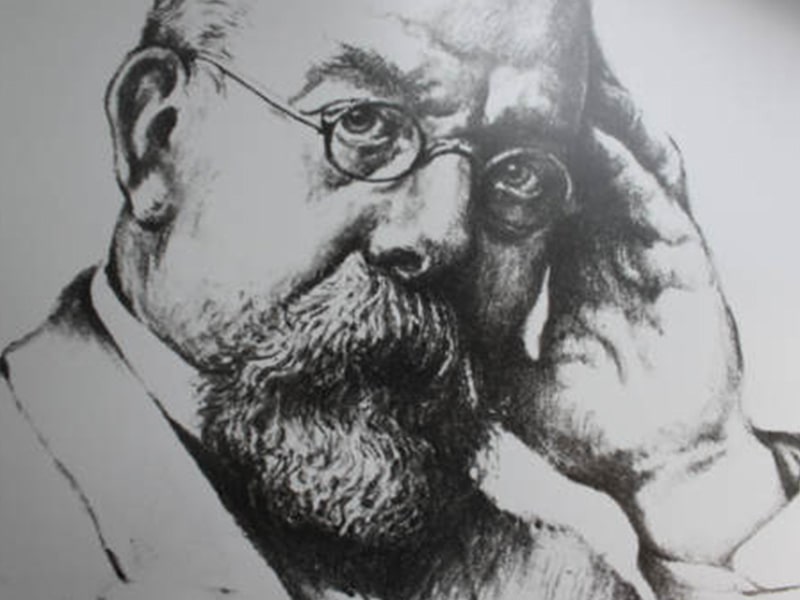
The establishment of the Hygiene Institute was made possible by the swift action of Robert Koch, who was called to Gelsenkirchen in late summer 1901 due to a typhoid epidemic. As politics, administration, industry, and the public were united in combating the outbreak, the sponsoring association began its work at the end of 1901, followed by the institute itself in early 1902, initiating research into and control of infectious diseases. Thousands of people were able to breathe a sigh of relief and look toward a livable future once again. The intensive efforts of numerous institutions throughout Central Europe ultimately removed the threat of epidemics.
The Institute Through Time
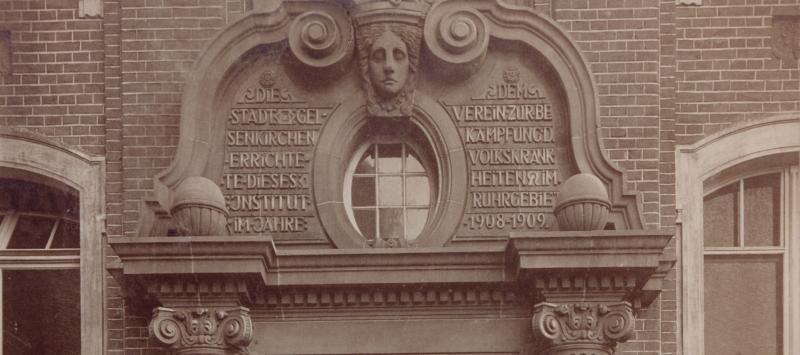
The “Hygienic and Bacteriological Institute,” the institute’s original name, was led by its first director, Prof. Dr. Hayo Bruns, from 1902 to 1936. His field of expertise was parasitic diseases, to which he devoted numerous publications. However, due to a serious illness in 1923, he was no longer able to lead the institute effectively. A lack of funding nearly led to its closure. Fortunately, the institute was taken over by the Ruhrverband, but was repurchased as early as 1929 and has since been known as the “Hygiene Institute of the Ruhr Area.” Bruns passed away in 1951.
A Brief Flourishing and a Time of Hardship
Bruns’ successors succeeded in revitalizing the institute in the following years and securing the financial resources necessary for its survival. In 1939, a state-recognized training institution was established, where medical-technical assistants were trained for many decades. Unfortunately, this period was short-lived. The Hygiene Institute was not spared when World War II brought the world to the brink of disaster. Towards the end of the war, the institute was almost completely destroyed, making purposeful work nearly impossible.
Funding from the State of North Rhine-Westphalia
The new director, Prof. Wüstenberg, guided the institute into calmer waters and consistently initiated its reconstruction. The training institution for medical-technical assistants (MTAs) was able to continue its work. New fields of activity were developed, and the institute gained a strong reputation.
Through financial support from the State of North Rhine-Westphalia within the framework of the Zukunftsinitiative Montanregion (ZIM), the Hygiene Institute was expanded in the early 1990s into one of the largest independent institutions in Europe in the field of environmental hygiene.