
Groundwater Hygiene Testing
Home » Our Services » Environmental Protection and Consumer Safety » Groundwater Hygiene Testing
Contact
M. Sc. Ludy Cuellar
Dipl.-Umweltwiss. Sebastian Bien
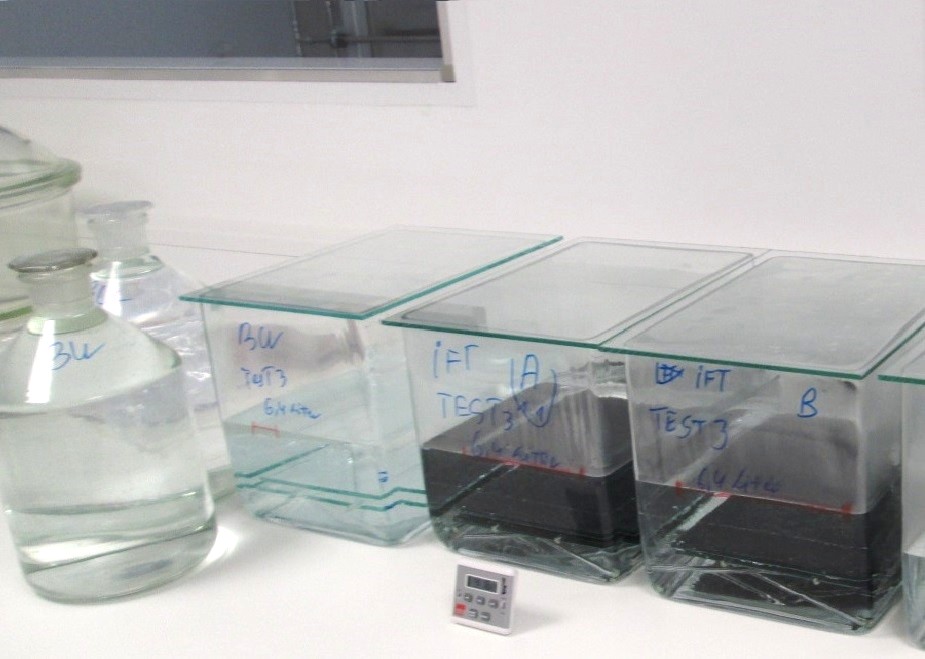
Elution methods
Elution methods are established testing procedures for assessing the environmental compatibility of, for example, construction products and materials. In real applications, regular contact with water may lead to the release of harmful substances. By simulating recurring leaching processes, potential substance releases can be examined and evaluated in advance under laboratory conditions prior to market introduction. Various standardized methods are available for this purpose.
- Inverse column tests (DIN 19631)
In this percolation test, a product is placed in a closed column through which a continuous flow of water is passed. At different contact times, the concentration of soluble constituents can be analytically determined. The temporal evaluation of migration behavior provides specific insights into hygienic relevance and product stability.
- Dynamic surface leaching tests (DSLT – DIN EN 16637)
These tests also simulate long-term contact of test specimens with water in order to assess the potential release of substances and relevant mass transfer processes. Material properties can be examined in a dynamic or static test system and evaluated with regard to their environmental compatibility.